Hotel en
 Medische keuringen beschikbaar bij het afrekenen
25 Nov 2026


Helideck operations roles are assessed for competency through a structured process that combines formal training, practical demonstration, and documented verification against industry-recognised standards. The assessment confirms that a person can safely perform their duties on or around a helideck before they are cleared to operate in that role. This article walks through the key questions around helideck crew competency, from who needs to be assessed to which OPITO courses are involved.
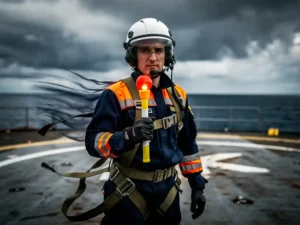
Any personnel with a designated safety or operational function on a helideck must hold a verified competency. The most prominent roles are the Helideck Landing Officer (HLO) and Helideck Assistant (HDA). Both roles carry direct responsibility for the safe arrival and departure of helicopters, which means informal familiarity with the helideck is not sufficient. Formal assessment is required.
Other personnel who may require formal helideck competency include:
The requirement applies across offshore oil and gas platforms, floating production units, and increasingly within the offshore wind sector, where crew transfer by helicopter is becoming more common.
A helideck competency assessment evaluates whether a candidate can demonstrate the knowledge, skills, and behaviours required for their specific role under realistic conditions. It typically includes a combination of written or verbal knowledge checks, practical exercises, and observed performance against a defined set of competency standards.
In practice, assessors look at a candidate’s ability to:
The assessment is not purely theoretical. Practical demonstration is central to the process, and candidates are expected to show competency in realistic or simulated conditions, not just describe what they would do.
Helideck training delivers the knowledge and skills a person needs for their role. Competency assessment confirms that those skills have been understood, retained, and can be applied correctly in practice. Training is a prerequisite for assessment, but completing a training course does not automatically mean a person has been assessed as competent.
Think of it this way: training is the learning process, and competency assessment is the verification step. A candidate may complete an HLO training course and still need to be formally observed and signed off by a qualified assessor before they can operate independently in the role. Some OPITO programmes integrate both elements within a single course structure, while others treat them as separate stages.
This distinction matters particularly for employers and QHSE teams managing crew documentation. A training certificate and a competency record are not the same thing, and both may be required depending on the operator’s safety case and applicable regulations.
A helideck competency assessment must be conducted by a qualified assessor who holds the relevant OPITO assessor approval and has direct operational experience in helideck roles. Self-assessment or peer sign-off without formal assessor status is not acceptable under OPITO standards.
Assessors are typically experienced HLOs or Helideck Supervisors who have completed an OPITO-approved assessor development programme. They must be able to objectively evaluate performance against defined competency standards and maintain accurate records of the assessment process and outcome.
On many installations, operators designate a lead HLO or Helideck Supervisor as the responsible assessor for their team. Alternatively, assessments can be arranged through an OPITO-approved training provider, particularly when a company does not have a qualified internal assessor available.
Helideck competency is not a one-time achievement. OPITO standards require that competency is maintained and periodically reassessed to ensure that skills remain current and that individuals continue to meet the required standard throughout their career in the role.
The reassessment frequency can vary depending on the specific role, the operator’s internal requirements, and the applicable regulatory framework. However, as a general principle, helideck crew are expected to demonstrate ongoing competency rather than rely solely on an initial qualification. Refresher training and periodic reassessment typically align with certificate renewal cycles, which are often set at two to four years depending on the course.
Employers and training coordinators should track both training certificate expiry dates and competency reassessment schedules separately, as these do not always fall at the same time.
OPITO offers a dedicated suite of helideck courses that form the foundation of competency for HLOs, HDAs, and related roles. These courses are specifically designed to meet the competency standards required by offshore operators and provide the structured training that precedes formal assessment.
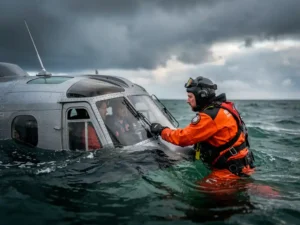
The core OPITO helideck courses relevant to competency include programmes for initial HLO and HDA certification, as well as refresher and consolidation courses for those maintaining their status. These are complemented by related offshore safety training such as HUET and BOSIET courses, which cover helicopter underwater escape and broader offshore survival skills that helideck crew are also expected to hold.
Fire response capability is another core element of helideck competency. Helideck crew must be prepared to act as first responders in a helicopter incident, which is why OPITO firefighting courses are closely linked to helideck training pathways.
At FMTC Safety, we help offshore professionals and the organisations that employ them navigate the full process of helideck competency, from initial training to certificate renewal. Here is what we offer:
Whether you are an individual HLO looking to renew your certification or an HSE team managing helideck crew compliance across a fleet, we make the process straightforward. View our OPITO helideck courses to find the right training for your role and get booked in today.