

 Hotel and
 Medical checks available at checkout
23 Oct 2026
Working offshore or at sea means being prepared for emergencies that develop quickly and in difficult conditions. Cold water, limited visibility, strong wind and delayed rescue can all make a survival situation more serious within minutes. That is why sea survival training focuses not only on evacuation and flotation, but also on staying alive after leaving the vessel or structure.
The GWO Sea Survival E-learning + Practical course is designed for personnel in the wind industry who may need to travel to or work from offshore installations. It combines online theory with practical exercises and covers the actions needed to respond to sea survival and rescue situations effectively.
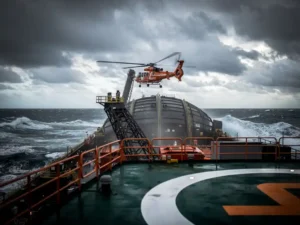
A water emergency is not only about getting out safely. It is also about what happens immediately after. Once a person enters the water, exposure, panic and disorientation can reduce survival time very quickly. In offshore wind environments, rescue may not be instant, which means personnel need to know how to protect themselves and others until help arrives.
Sea survival training prepares participants for that reality. It helps them understand how to enter the water safely, how to use survival equipment correctly and how to maintain their physical condition while waiting for recovery.
A life raft is one of the most important pieces of survival equipment in a maritime or offshore emergency. It provides flotation, shelter and a more stable environment than remaining in the water. Entering and organizing a life raft correctly can significantly improve survival chances, especially in cold conditions.
Training usually focuses on controlled boarding, assisting others and maintaining order inside the raft. These actions may sound simple in theory, but become more difficult in rough water, low temperatures or high-stress conditions. That is why practical instruction is important. Participants need to understand not just what a life raft is for, but how to use it efficiently when time and conditions are working against them.
Sea survival training also addresses group behavior after evacuation. Remaining together, following clear actions and using the raft properly helps conserve energy and improves visibility for rescuers.
One of the main risks in a sea survival scenario is hypothermia. Cold water removes body heat rapidly, and even a short exposure can affect movement, breathing and judgment. For that reason, prevention starts immediately after entering the water or boarding a life raft.
Training teaches participants how to reduce heat loss, preserve energy and use protective positions and equipment effectively. This includes understanding why unnecessary movement in cold water can make the situation worse, and why body heat conservation becomes a priority as soon as evacuation has taken place.
Hypothermia prevention is not only a personal matter. In an emergency, personnel also need to recognise the signs of cold stress in others. Early signs such as shivering, confusion or loss of coordination can indicate that someone needs help, monitoring or priority attention during rescue.
First aid at sea is different from first aid in a controlled workplace environment. Conditions are often unstable, space may be limited and evacuation to professional medical care may take time. That makes basic emergency care skills especially important.
In a sea survival context, emergency care focuses on immediate priorities. This includes checking responsiveness, managing breathing problems, recognising cold-related symptoms and supporting casualties until rescue teams can take over. The aim is not to replace advanced medical care, but to stabilise the situation and prevent further deterioration.
This part of the training is closely connected to survival procedures. A casualty in the water or in a raft may be affected by cold, shock, exhaustion or injury at the same time. Recognising what matters most in those first moments is essential for an effective response.
Sea survival cannot be learned through theory alone. Reading about life rafts, rescue procedures or hypothermia response is useful, but practical experience is what builds confidence and controlled decision-making.
That is why the GWO Sea Survival E-learning + Practical format is relevant. The online part supports understanding of procedures and hazards, while the practical part allows participants to apply what they have learned in realistic survival and rescue exercises. This combination makes the training more flexible without losing the hands-on element that offshore safety training requires.
The GWO Sea Survival E-learning + Practical course is intended for personnel in the wind industry who need to understand sea survival procedures and emergency response in offshore conditions. It provides both theoretical knowledge and practical skills related to evacuation, survival equipment, rescue support and first aid in a maritime setting.
For employees working offshore, this training supports both personal safety and operational readiness. It helps participants prepare for situations where fast, disciplined action can make a critical difference.
Sea survival training is about more than getting out of the water. It is about staying alive, protecting others and responding effectively until rescue is complete.
View the GWO Sea Survival E-learning + Practical course on FMTC Safety for course details, training locations and booking options.