Hotel and
 Medical checks available at checkout
31 Oct 2026
E-BOSIET is required for offshore workers who need an enhanced level of survival training, specifically those working in regions or on projects where extended helicopter travel over water is involved. It builds on the standard BOSIET by adding an extra helicopter underwater escape exercise, making it the right choice when operational risk levels demand it. This article answers the most common questions about E-BOSIET so you know exactly whether it applies to you.
The key difference between E-BOSIET and BOSIET is the number of helicopter underwater escape training (HUET) exercises included. E-BOSIET stands for Enhanced Basic Offshore Safety Induction and Emergency Training, and it includes an additional HUET run compared to the standard BOSIET. This makes E-BOSIET more demanding and is designed for higher-risk offshore environments.
Both courses cover the same core areas: sea survival, firefighting, first aid, and helicopter safety. However, the enhanced version prepares workers for a greater range of underwater escape scenarios. The additional HUET exercise gives participants more practice under realistic conditions, which is why certain operators and regions require it as a minimum standard rather than the basic version.
If you are unsure which course applies to your situation, the BOSIET and HUET course overview can help you compare the available options.
E-BOSIET is required for offshore workers who travel to or from offshore installations by helicopter, particularly when operating in regions or under contracts that specify the enhanced standard. This typically includes oil and gas workers, maintenance technicians, engineers, and other personnel who regularly travel over open water as part of their work.
In practice, the requirement is often set by:
If your employer, client, or project brief specifies E-BOSIET, that requirement takes precedence. When in doubt, check your mobilization paperwork or contact your QHSE department before booking.
E-BOSIET certification is most commonly required in the UK North Sea, Norway, and other regions where offshore helicopter operations are frequent and the distances traveled over water are significant. Certain operators working in West Africa, the Middle East, and other active offshore regions also specify E-BOSIET in their contractor requirements.
Project-level requirements vary. Some operators accept the standard BOSIET, while others mandate E-BOSIET for all personnel boarding their installations. The best way to confirm what applies to your specific project is to review the operator’s competency requirements or check with your mobilization coordinator. Regulatory bodies in different countries may also issue guidance that influences what is considered the minimum acceptable standard.
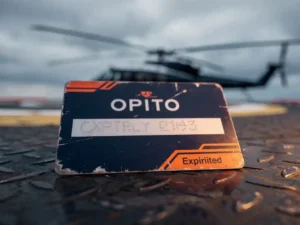
E-BOSIET certification is valid for four years. After this period, the certificate expires and the holder must complete a refresher course, known as FOET (Further Offshore Emergency Training), to maintain their offshore competency. The FOET does not require repeating the full E-BOSIET course, but it must be completed before the four-year validity period runs out.
Allowing your certificate to lapse can result in delays to mobilization, as most operators will not allow uncertified personnel to travel offshore. Keeping track of your expiry date and booking your FOET in advance is strongly recommended, especially during busy project periods when training slots fill up quickly.
The E-BOSIET course covers all the core elements of offshore emergency training, with the addition of an extra helicopter underwater escape exercise. The course is accredited by OPITO and typically runs over several days, combining theory with hands-on practical sessions.
The main components of the course include:
All exercises are conducted by qualified instructors with practical offshore experience. The training is designed to be realistic and relevant, so participants leave with skills they can apply in an actual emergency situation.
Booking E-BOSIET training follows a straightforward process. Here is what to do:
Training locations near airports, ports, or industry hubs make it easier to complete your certification just before traveling to a project site. If you are coordinating training for a team, it is worth contacting the provider directly to discuss group bookings and scheduling flexibility.
We offer OPITO-accredited E-BOSIET training at strategically located training centers designed to fit around your work schedule and travel plans. Here is what we provide:
Whether you are booking for yourself or coordinating training for a team, we make the process straightforward. Contact us to find the right course date and location for your situation.