Hotel and
 Medical checks available at checkout
25 Oct 2026
On an offshore installation, the installation manager or offshore installation manager (OIM) holds overall responsibility for helideck safety. While dedicated helideck personnel carry out the day-to-day operational duties, the OIM is ultimately accountable for ensuring that all helicopter operations on the installation meet the required safety standards. This shared structure of roles and responsibilities is what keeps offshore helideck operations safe and compliant.
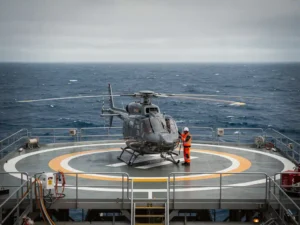
The helideck landing officer (HLO) is the person in charge of all helicopter landing and departure operations on an offshore installation. The HLO coordinates directly with the helicopter crew, manages personnel and cargo movements on the helideck, and ensures that the landing area is safe, clear, and compliant before any aircraft arrives or departs.
The HLO acts as the primary point of contact between the helicopter crew and the installation. Their responsibilities include conducting pre-flight and post-flight deck checks, confirming that weather conditions are within acceptable limits, managing passenger briefings, and overseeing the handling of dangerous goods. They also maintain the helideck log and ensure all operations follow the applicable regulatory and operator procedures.
The role demands strong situational awareness, clear communication skills, and a thorough understanding of offshore helicopter safety protocols. The HLO must be certified and is expected to keep their qualifications current at all times.
The key difference is one of authority and scope. The HLO leads and authorises helideck operations, while the helideck assistant (HDA) supports those operations under the HLO’s supervision. The HDA assists with deck checks, marshalling, fire watch duties, and the safe movement of passengers and cargo, but does not hold the same decision-making authority as the HLO.
In practice, both roles are essential. On a busy helideck, the HLO cannot manage every task alone. The HDA provides the hands-on support needed to keep operations running safely and efficiently. However, the HDA must always work within the boundaries set by the HLO and cannot independently authorise a landing or departure.
Both roles require dedicated OPITO-certified training, but the certification pathways differ. The HDA qualification is typically a prerequisite for progressing to the HLO certification, making it a natural step in a helideck career.
The offshore installation manager (OIM) holds overall responsibility for helideck safety on an offshore platform. While the HLO manages the operational aspects of each helicopter movement, the OIM is accountable for the broader safety management system, including ensuring that qualified personnel are in place, that procedures are followed, and that the helideck meets all regulatory requirements.
This accountability cannot be delegated away entirely. Even when experienced helideck personnel are present, the OIM retains ultimate authority over whether helicopter operations proceed. In deteriorating weather, during an emergency, or when a safety concern arises, the OIM has the authority to suspend all helideck activity.
Helideck personnel are required to hold OPITO-accredited certifications specific to their role. The HDA must complete the Helideck Assistant training, while the HLO must hold the Helideck Landing Officer certification. Both certifications are governed by OPITO standards and must be renewed periodically to remain valid.
In addition to role-specific helideck certifications, helideck personnel are typically required to hold the following:
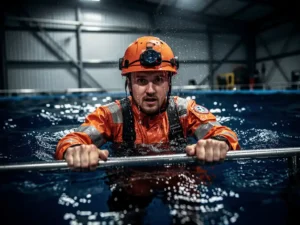
The HUET and BOSIET courses are particularly relevant for helideck personnel, as helicopter underwater escape training is a core safety requirement for anyone working in close proximity to helicopter operations offshore. Certifications must be kept up to date, and operators are responsible for tracking expiry dates to avoid compliance gaps.
Helideck safety is a shared responsibility governed by a formal interface between the offshore installation operator and the helicopter operating company. The installation operator is responsible for the physical condition of the helideck, the competence of helideck personnel, and the implementation of onboard safety procedures. The helicopter company is responsible for the airworthiness of the aircraft, crew qualifications, and flight operations.
This division is typically formalised through a helideck operations manual and an interface document agreed upon by both parties. Neither side can override the other’s area of responsibility unilaterally. For example, the helicopter captain retains the right to refuse a landing if they judge the deck to be unsafe, regardless of what the HLO has declared. Equally, the HLO can refuse to accept a landing if conditions on the installation do not meet the required standards.
Clear communication between the two parties before, during, and after each operation is essential to making this shared model work effectively.
When helideck safety responsibilities are unclear or break down, the consequences can be severe. Miscommunication, gaps in certification, or ambiguous authority structures have contributed to serious offshore helicopter incidents. Investigations into such events consistently highlight the same root causes: unclear roles, outdated procedures, inadequate training, and poor coordination between the installation and the helicopter operator.
Common failure points include:
Regulatory bodies and industry standards such as the CAP 437 guidelines exist precisely to prevent these failures. Operators must ensure that roles are clearly defined, that all personnel are certified and current, and that emergency procedures are rehearsed regularly. When responsibilities are well understood and properly documented, the risk of a critical failure drops significantly.
At FMTC Safety, we provide the OPITO-accredited training that helideck personnel and offshore workers need to meet their certification requirements and stay compliant. Whether you are an individual working towards your HDA or HLO qualification, or an organisation managing certifications for a team heading offshore, we offer structured, practical training delivered by experienced instructors.
Here is what we offer to support helideck and offshore helicopter safety:
If you need to book helideck training or check which certifications are required for your role or project, get in touch with our team and we will help you find the right course and schedule.