Hotel and
 Medical checks available at checkout
20 Oct 2026
Before booking helideck training, HR managers need to understand which certifications apply to their workforce, confirm that employees meet the medical and role requirements, and plan bookings well in advance to avoid project delays. Helideck training is a mandatory safety requirement for offshore professionals who travel by helicopter or work on or near helidecks, and the specific course required depends on the worker’s role and the region where they operate. This article walks through the key questions HR managers face when organizing this training.
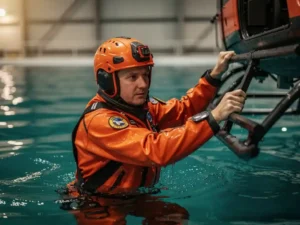
Helideck training covers a set of OPITO-accredited certifications designed to prepare offshore workers for helicopter travel and emergency situations. The two primary certifications are the HUET and BOSIET courses, which cover helicopter underwater escape, sea survival, and emergency procedures. Depending on the role and location, workers may also need tropical variants or additional emergency training.
Here is a breakdown of the main helideck safety certifications HR managers will encounter:
Each certification has a defined validity period, typically ranging from four to five years depending on the course type. HR managers should track expiry dates carefully to ensure workers remain compliant before each project assignment.
Helideck training is required for any professional who travels to or from an offshore installation by helicopter, or who works in roles where helicopter emergency response is part of their duties. This includes offshore oil and gas workers, wind turbine technicians working on offshore platforms, marine crew, contractors, and any support staff who access offshore sites via helicopter.
The specific course required depends on two main factors: whether the worker is new to offshore environments or renewing an existing certification, and whether the work location falls within a standard or tropical climate zone. Operators and project owners typically specify which OPITO-accredited certification is required as a condition of site access, so HR managers should confirm requirements directly with the operator or project documentation before booking.
Workers who have never completed offshore safety training will generally start with a BOSIET, while those renewing will complete a FOET. Workers heading to tropical regions will need the T-BOSIET or T-FOET variants. In all cases, a valid medical fitness certificate is also required before attending helideck training.
HR managers should book helideck training at least four to six weeks before the required start date, and ideally earlier when coordinating training for multiple employees. HUET and BOSIET courses involve pool-based practical exercises and require specific facilities, which means available spots can fill up quickly, especially during peak offshore project seasons.
Planning ahead also accounts for the following practical considerations:
Last-minute bookings are sometimes possible, but they carry the risk of unavailable spots or compressed timelines that create stress for both HR teams and workers.
After helideck training is completed, HR managers are responsible for collecting, storing, and tracking a set of key documents to demonstrate workforce compliance. The most important record is the OPITO certificate itself, which confirms the worker has completed an accredited course and includes the certification date and expiry date.
Beyond the certificate, HR teams should maintain records of the following:
Many operators and clients will request copies of these documents before approving site access, so having them organized and easily retrievable saves time during mobilization. Using a centralized training management system or even a well-maintained spreadsheet can help HR teams stay on top of expiry dates across a larger workforce and flag renewals well before they become urgent.
When choosing a helideck training provider, HR managers should prioritize OPITO accreditation above all else. OPITO accreditation is the industry-recognized standard for offshore safety training, and without it, a certificate may not be accepted by operators or project owners. Beyond accreditation, the right provider should offer practical, pool-based facilities, experienced instructors, and flexible scheduling that fits workforce planning needs.
Key factors to evaluate when comparing providers include location convenience, course availability, and how the provider handles rescheduling or cancellations. Training centers located near airports, ports, or major offshore industry hubs make it easier for workers to complete training as part of their mobilization route rather than making a separate trip. Providers that guarantee courses run regardless of group size offer more reliability for HR teams coordinating individual bookings or small groups.
Instructor quality also matters. Helideck and offshore helicopter training involves real emergency scenarios, and instructors with practical field experience deliver training that is more relevant and better retained by participants. Checking reviews and Trustpilot ratings can give a realistic picture of participant experience before committing to a provider.
We understand that HR managers and training coordinators are managing tight project timelines, expiry dates across multiple workers, and the pressure of getting the right certifications in place without delays. At FMTC Safety, we make that process straightforward.
If you are planning helideck training for your team in 2026, get in touch with us to discuss scheduling options and find the right course for your workforce.