

 Hotel and
 Medical checks available at checkout

26 Sep 2026
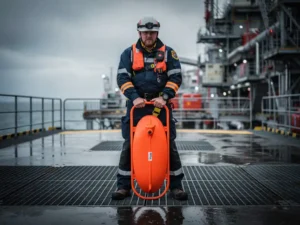
A helideck crew is a team of trained personnel responsible for safely managing all helicopter operations on an offshore installation. Their duties cover everything from pre-flight deck inspections and weather monitoring to guiding aircraft in, securing the helicopter on deck, assisting passengers, and responding to emergencies. These responsibilities are clearly defined by industry standards and require specific OPITO-certified training to carry out legally and safely.
Helideck operations are among the highest-risk activities on any offshore platform, which is why every crew member must understand their exact role before a helicopter ever approaches. The sections below break down who does what, and what that looks like in practice.
A helideck crew typically consists of the Helideck Landing Officer (HLO), one or more Helideck Assistants (HDAs), and firefighting personnel. Each role carries specific responsibilities, and the crew works together as a coordinated unit during every helicopter movement on the platform.
The Helideck Landing Officer is the person in charge of the helideck during operations. The HLO communicates directly with the pilot, gives landing and departure clearances, monitors weather and deck conditions, and has the authority to stop operations if safety is compromised. This is a supervisory and decision-making role that requires both technical knowledge and situational awareness.
The Helideck Assistants support the HLO with physical tasks on the deck. They chock and chain the helicopter after landing, assist passengers on and off the aircraft, handle baggage and cargo, and help maintain a safe environment around the helicopter. HDAs must stay alert to rotor hazards and follow strict movement protocols at all times.
Firefighting personnel are also a required part of helideck operations. They stand by with fire suppression equipment during every landing and departure, ready to respond immediately if something goes wrong.
Before any helicopter is cleared to land, the helideck crew carries out a structured pre-landing inspection to confirm the deck is safe. This includes checking the helideck surface for obstructions, verifying that firefighting equipment is in place and operational, confirming weather conditions are within acceptable limits, and ensuring the deck lighting and visual aids are functioning correctly.
The HLO also reviews the helicopter type and weight to confirm it is compatible with the deck’s certified load capacity. Communication with the incoming pilot is established early, and the HLO confirms the number of passengers and any special cargo. Only when all checks are complete and conditions are acceptable does the HLO issue landing clearance.
This pre-landing process is not a formality. It is the first line of defense against incidents, and skipping or rushing any step significantly increases risk.
During landing and departure, the helideck crew takes on clearly defined positions and tasks that keep the operation controlled and safe from the moment the helicopter touches down to the moment it lifts off again.
Once the helicopter lands, the sequence of crew actions follows a strict order:
Firefighting crew remain on standby throughout the entire process. Departure follows a similar structure in reverse, with the HLO giving the final all-clear for the pilot to lift off only after confirming the deck is clear and all personnel are at a safe distance.
In a helicopter emergency, the helideck crew activates the platform’s emergency response plan immediately. The HLO alerts the installation’s control room and coordinates the crew’s response on deck, while firefighting personnel deploy equipment and begin suppression or rescue actions as required by the type of emergency.
The most common helideck emergencies include fire on or near the aircraft, a heavy landing or structural incident, a passenger medical emergency, or a ditching scenario where the helicopter goes down in the water near the platform. Each scenario has a predefined response procedure that the crew trains for regularly.
Speed and coordination are critical. Every crew member must know their role in an emergency without needing to be told. This is why major emergency response training is a core part of helideck crew certification, not an optional add-on.
Helideck crew members must hold OPITO-accredited certifications specific to their role. The HLO requires the OPITO Helideck Landing Officer certification, while HDAs must complete the OPITO Helideck Assistant course. Both roles also require valid basic offshore safety training, including BOSIET or FOET, before working on any offshore installation.
In addition to role-specific helideck training, crew members are typically required to hold:
Certifications have defined validity periods and must be renewed on time to remain compliant. Operators and contractors typically track these expiry dates closely, as an expired certificate can prevent a worker from boarding a helicopter or starting a project.
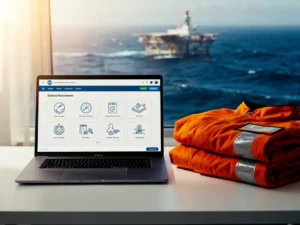
We offer the full range of OPITO-accredited helideck crew courses needed to qualify and recertify as an HLO or HDA. Whether you are completing initial certification or renewing an existing qualification, we make it straightforward to get the training done without disrupting your schedule or your project timeline.
Here is what makes training with us practical:
If you need to book helideck crew training or want to find out which courses apply to your role or team, browse our full OPITO helideck courses and find a date that works for you.