

 Hotel and
 Medical checks available at checkout

24 Oct 2026
OPITO blended learning combines online theory modules with shorter in-person practical sessions, making it faster to complete than traditional classroom-only training. For most blended OPITO courses, participants finish the theory at home or at the office before attending a condensed practical day, which typically cuts total training time by one to two days. This article breaks down the key differences between both formats across format, duration, employer acceptance, flexibility, cost, and how to choose the right option in 2026.
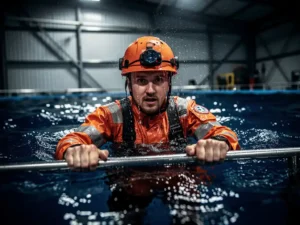
OPITO blended learning is a training format that splits the course into two parts: an e-learning component completed remotely and a practical component attended in person. The online module covers theoretical knowledge such as safety regulations, emergency procedures, and hazard awareness. The in-person session then focuses on hands-on skills like helicopter underwater escape, firefighting, or sea survival, depending on the course.
The e-learning element is self-paced and can be completed before arriving at the training center. This means participants arrive already familiar with the theory, allowing instructors to focus entirely on practical drills during the in-person day. Courses like the OPITO eBOSIET follow exactly this structure, with the e-learning completed remotely and the practical element attended at a certified training facility.
OPITO classroom training typically takes three to four days, depending on the specific course. OPITO blended learning reduces the in-person requirement to one or two days, since the theoretical content is covered in advance through e-learning. The total time commitment is similar, but the physical attendance at a training center is significantly shorter.
For offshore workers with tight project schedules, this difference matters. A traditional BOSIET course may require three full days away from work or travel, while the blended version condenses the face-to-face element into a single intensive practical day. The e-learning portion can be completed in the evenings or on weekends, making it easier to fit around existing commitments.
Yes, OPITO blended learning courses are fully accredited by OPITO and are accepted by employers and operators in the same way as classroom-only training. The certificate issued upon completion carries the same OPITO accreditation, and the practical competencies assessed are identical across both formats. Operators in the North Sea, Gulf of Mexico, and other offshore regions recognize blended learning certificates without restriction.
The key condition is that the course must be delivered by an OPITO-approved training provider. As long as the provider holds the correct accreditation for the blended format, the resulting certificate is valid for the same duration and recognized by the same operators as a traditionally delivered course. Always confirm with your employer or operator if there are any project-specific requirements before booking.
Blended learning is generally more flexible for offshore workers and contractors. The ability to complete theory online removes the need to travel to a training center for multiple consecutive days, which is a significant advantage for professionals who work rotational schedules or are based in remote locations.
Here are the main flexibility advantages of the blended format:
Classroom-only training, on the other hand, may suit workers who prefer structured group learning or who have limited access to reliable internet for completing e-learning modules. Some participants also find it easier to stay focused in a classroom environment with an instructor present throughout.
Blended learning courses are often priced similarly to classroom training at the course level, but the total cost of attendance is typically lower for participants. The main savings come from reduced travel expenses, fewer nights in accommodation, and less time taken off work. For contractors who are self-employed, fewer days away from a project directly affects their income.
For companies booking training for multiple employees, the blended format can also reduce indirect costs such as lost productivity. Sending a team member to a one-day practical session rather than a three-day classroom course has a measurable impact on scheduling and operational continuity. However, it is worth comparing course fees directly, as pricing varies by provider and location.
The right OPITO training format in 2026 depends on your schedule, learning preference, and the specific course required. Blended learning is the better choice for most offshore workers and contractors who need to complete training quickly and minimize time away from work. Classroom training remains a strong option for those who benefit from full instructor presence throughout or who are completing a course that does not yet have an approved blended version.
Consider the following steps when deciding:
For most professionals in 2026, blended learning offers a practical and time-efficient path to OPITO certification without any compromise on the quality or recognition of the certificate. Browse the full range of OPITO e-learning courses to see which blended options are currently available.
We offer both blended and classroom OPITO training formats across our certified training centers in the Netherlands, the United States, France, Belgium, and other strategic locations. Whether you need a full classroom course or want the flexibility of a blended option, we make it straightforward to find and book the right format for your situation.
Here is what we offer:
If you are unsure which format or course is right for your role or project, our team is happy to help. View our full OPITO offshore course overview or get in touch directly to discuss your training needs.