

 Hotel and
 Medical checks available at checkout
16 Oct 2026
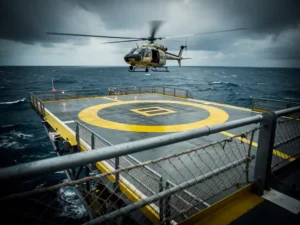
A helideck safety management system (SMS) supports offshore compliance by providing a structured framework that governs every aspect of helicopter landing operations on an installation. It documents procedures, assigns responsibilities, and ensures that helideck activities consistently meet the regulatory and operational standards required by certifying bodies and operators. The sections below unpack what that means in practice, from the standards involved to the training required.
A helideck safety management system covers all documented policies, procedures, and controls that govern the safe operation of a helideck on an offshore installation. It includes everything from physical infrastructure checks and firefighting equipment maintenance to personnel competency requirements, emergency response planning, and communication protocols with incoming aircraft.
In practical terms, the helideck SMS brings together several interconnected elements:
The SMS acts as the central document that ties all of these elements together, ensuring nothing is left to informal practice or individual interpretation.
Helideck operations offshore are governed by a combination of international aviation standards, flag state regulations, and industry-specific guidelines. The most widely applied framework comes from the International Civil Aviation Organization (ICAO), alongside standards set by the UK Civil Aviation Authority (CAA) and guidance from bodies such as the Oil and Gas UK (OGUK) Helideck Certification Agency (HCA).
For installations operating under OPITO-aligned regimes, additional competency and certification requirements apply to helideck personnel. National regulations also play a role: installations in the North Sea, for example, must align with UK or Norwegian regulatory requirements depending on their location. In other regions, local maritime or aviation authorities set the applicable rules.
The helideck SMS must demonstrate alignment with these standards through documented procedures, regular audits, and certified personnel. Without that documented alignment, operators risk non-compliance findings during inspections, which can ground helicopter operations and delay personnel movements.
A helideck SMS reduces risk by replacing informal, ad hoc practices with consistent, documented procedures that every person involved in helideck operations must follow. When everyone on the team knows exactly what to do before, during, and after a helicopter movement, the likelihood of human error, missed checks, or delayed emergency response drops significantly.
The risk reduction works across several layers. Pre-landing checks ensure the deck is clear, marked correctly, and within acceptable condition limits. Trained helideck assistants and a qualified Helideck Landing Officer (HLO) oversee every movement. Firefighting teams stand ready with the correct equipment. Emergency procedures are rehearsed, not just written down.
When something does go wrong, a well-maintained SMS means the response is faster and better coordinated. Incident reports feed back into the system, driving continuous improvement rather than one-off reactions. This closed-loop approach is what separates a functioning SMS from a document that simply sits in a filing cabinet.
Overall responsibility for helideck compliance on an offshore installation sits with the installation operator or duty holder. In practice, this is typically delegated to a designated person onboard, often the Offshore Installation Manager (OIM), who oversees the helideck team and ensures the SMS is implemented and maintained.
Within that structure, specific roles carry specific accountabilities:
Compliance is never the responsibility of a single person. The SMS defines how each role connects, so accountability is clear at every stage of an operation.
Supporting a helideck SMS requires certified training for all personnel involved in helideck operations, with the specific courses depending on each person’s role. Helideck Landing Officers and Helideck Assistants must hold current OPITO-accredited helideck certifications, which cover both the operational and emergency response dimensions of their roles.
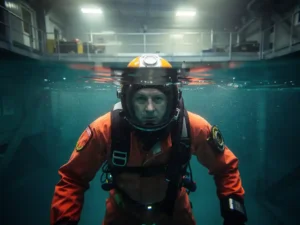
Beyond the helideck-specific qualifications, broader offshore safety training underpins the whole system. Personnel need valid HUET and BOSIET certifications to operate safely in the offshore environment, and offshore firefighting training is essential for helideck assistants who form part of the emergency response team.
Refresher training is also a compliance requirement, not just good practice. OPITO standards specify renewal intervals for most helideck qualifications, and an expired certificate can prevent a team member from performing their role, creating gaps in the SMS that could affect the installation’s compliance status.
A helideck SMS should be formally audited at least annually, with more frequent reviews triggered by incidents, regulatory changes, or significant operational changes on the installation. Most operators build scheduled audits into their broader safety management calendar, treating the helideck SMS as a living document rather than a fixed reference.
Between formal audits, the SMS should be reviewed whenever a relevant change occurs. This includes updates to applicable standards, changes in personnel or their certifications, modifications to the physical helideck structure, or lessons learned from incidents at the installation or elsewhere in the industry.
Regular drills and exercises also generate feedback that should feed into SMS updates. If a drill reveals a gap in a procedure or a piece of equipment that did not perform as expected, the SMS needs to reflect what was learned. An SMS that is reviewed only on a fixed schedule, without responding to real-world findings, will gradually fall out of step with actual operational conditions.
Maintaining a compliant helideck SMS depends directly on having certified, trained personnel in every role the system requires. That is where we come in. At FMTC Safety, we offer OPITO-accredited training that helideck teams, offshore workers, and safety coordinators need to meet their certification requirements and keep operations running without interruption.
Here is what working with us looks like in practice:
Whether you are booking for one person or coordinating training across a team, we make it straightforward to stay compliant. Get in touch with us to find out which helideck or offshore safety courses are right for your situation.