

 Hôtel et
 Médical chèques disponibles à la caisse
24 Nov 2026
Helideck crew members need a combination of personal protective equipment, firefighting tools, communication systems, and rescue gear to safely manage helicopter operations. The exact equipment required is defined by international standards, primarily set by OPITO and the International Maritime Organization (IMO), and applies to all offshore installations and vessels with a helideck. Below, we break down each category of helideck crew equipment and explain who is responsible for keeping it ready.
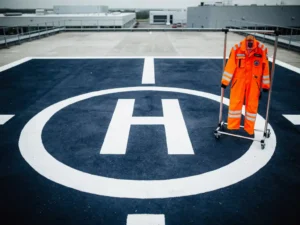
A helideck crew member wears a specific set of PPE designed to protect against fire, rotor wash, noise, and impact during helicopter operations. The standard PPE kit for a Helideck Landing Officer (HLO) and helideck assistants includes a fire-resistant suit, helmet, gloves, ear defenders, and safety footwear. This equipment must meet recognized standards and be inspected before each operation.
Color coding is commonly used to distinguish roles. The HLO typically wears a different color than helideck assistants, making it immediately clear who is directing the operation. This visual clarity is a simple but important safety measure during high-pressure situations.
A helideck must have dedicated firefighting equipment on standby at all times during helicopter operations. This includes foam monitors, dry powder extinguishers, hose reels, and personal protective firefighting gear. The equipment must be positioned for immediate deployment and regularly tested to ensure it functions when needed.
Foam application systems are the primary tool for suppressing aviation fuel fires, as standard water is ineffective against fuel-based ignition. Dry powder extinguishers serve as a backup for electrical fires or smaller outbreaks. Helideck firefighting teams are trained to deploy this equipment within seconds of an incident, which is why helideck crew training places such strong emphasis on emergency drills and timed response exercises.
All firefighting equipment on a helideck must comply with CAP 437 (for UK operations) or equivalent national and international standards. Quantities and placement are specified based on the size of the helideck and the type of aircraft it receives.
Helideck crew use radio communication systems to coordinate with the helicopter pilot, the installation control room, and emergency response teams. The primary tool is a dedicated aviation VHF radio, allowing direct contact with the aircraft during approach, landing, and departure. Backup communication systems must also be in place in case of primary failure.
The HLO is responsible for maintaining radio contact and relaying critical information such as deck status, wind conditions, and any hazards. Communication headsets integrated into the helideck helmet allow hands-free operation, which is essential when the HLO is simultaneously directing the aircraft and managing deck personnel.
Clear, standardized radio procedures are used to avoid miscommunication. Helideck crew follow defined phraseology and protocols, which are practiced during training to ensure consistent performance under pressure.
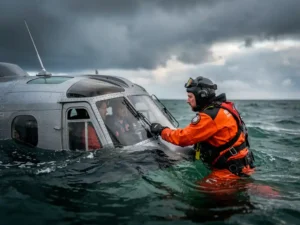
A helideck must be equipped with rescue and first aid equipment to respond immediately to injuries or emergencies during helicopter operations. This typically includes a stretcher, first aid kit, fire blankets, and emergency cutting tools. The equipment is stored in a clearly marked, accessible location close to the helideck area.
In addition to the physical equipment, at least one trained first aider must be present or immediately available during helicopter operations. On larger installations, a medic may be on standby. The goal is to stabilize casualties quickly while a full emergency response is mobilized.
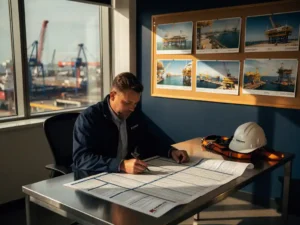
The Helideck Landing Officer (HLO) is responsible for managing helideck equipment, conducting pre-operation checks, and ensuring all safety systems are functional before any helicopter movement. On most installations, this responsibility is supported by the offshore installation manager and the QHSE department, who oversee compliance with regulatory and operator standards.
Equipment inspections follow a structured schedule. Pre-flight checks are completed before every helicopter movement, while more detailed inspections are carried out weekly and monthly. Records of these checks are maintained as part of the installation’s safety management system.
The HLO role requires formal certification, typically through OPITO-accredited training. This ensures the person in charge has both the technical knowledge and the practical skills to manage equipment, direct operations, and respond to emergencies. Regular refresher training keeps those skills current and aligned with the latest operational standards.
Understanding which equipment helideck crew need is one thing. Knowing how to use it correctly under pressure is what the training is for. At FMTC Safety, we offer OPITO-accredited helideck courses that prepare both new and experienced crew members for real operational conditions.
En suivant une formation chez nous, vous pouvez vous attendre à :
Whether you are booking training for yourself or coordinating certification for a team, we make the process straightforward. Browse our full range of OPITO helideck courses to find the right course for your role and get your crew certified and ready for operations.