

 Hotel and
 Medical checks available at checkout
23 Oct 2026
Yes, you can work offshore without prior offshore experience. Most entry-level offshore roles do not require you to have worked offshore before, but they do require you to hold specific safety certifications before you set foot on any installation. Your qualifications, attitude, and safety training matter far more than offshore experience when you are just starting out.
This article walks through the most common questions people have when they are looking to break into the offshore industry for the first time.
To work offshore without experience, you need a recognized safety certification at a minimum. The most widely required qualification for offshore workers globally is the BOSIET (Basic Offshore Safety Induction and Emergency Training), accredited by OPITO. This covers helicopter safety, sea survival, firefighting, and first aid. Without it, most operators will not allow you on site.
Beyond the BOSIET, employers may also require:
Some regions have their own specific requirements on top of the OPITO standard. For example, the Norwegian Continental Shelf follows NOGEPA standards, while certain tropical regions require a T-BOSIET instead of the standard version. Always check the requirements for the specific location and operator you are targeting.
Yes, offshore employers regularly hire people with no prior offshore experience, particularly for entry-level and trade-based roles. What employers are looking for at this stage is proof that you are safety-certified, physically fit, and trained in your core skill or trade. Offshore experience is something you build on the job.
Entry-level roles that are commonly accessible to career starters include roustabouts, deckhands, catering crew, assistant technicians, and trainee roles in engineering or maintenance. These positions are designed to bring new people into the industry and give them their first offshore exposure.
What makes you a stronger candidate without experience is a combination of the right safety certifications, a relevant trade or technical background, and a willingness to work rotating shift patterns in a demanding environment. Employers value candidates who have done their homework and arrived with their mandatory training already completed.
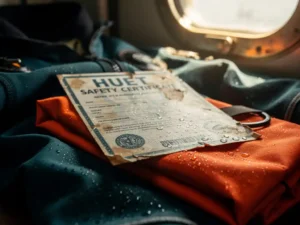
Before your first offshore job, you need to complete mandatory safety training that covers emergency survival, firefighting, and first aid. The OPITO BOSIET is the core qualification for most global offshore locations. It is a multi-day course that includes helicopter underwater escape training (HUET), sea survival, fire and explosion awareness, and basic offshore emergency first aid.
Here is a clear overview of the key training you are likely to need:
Once you are certified and working offshore, your BOSIET certificate is valid for four years. After that, you will need to complete a FOET (Further Offshore Emergency Training) to keep your certification current.
Getting offshore-ready from scratch typically takes between one and three weeks, depending on which courses you need, your availability, and how quickly you can schedule your offshore medical. The BOSIET itself is usually a two to three day course. Add in your medical and any additional role-specific training, and most people are fully certified within two to four weeks.
The process moves faster if you book your medical and your safety training in parallel rather than waiting for one to finish before scheduling the next. Some training providers, including those with multiple locations, make it easier to find a date that fits your schedule without long waiting times.
If you are targeting a specific project start date, work backwards from that date and give yourself at least three to four weeks of lead time to be safe. Rushing certification at the last minute adds unnecessary stress and risks project delays.
The offshore wind sector is currently one of the most accessible entry points for people looking to start an offshore career without experience. The wind industry is growing rapidly and actively recruiting new talent, including technician trainees and support crew. The oil and gas sector also has entry-level roles, though competition can be higher for certain positions.
Here is a quick breakdown by sector:
If you are weighing your options, the wind sector is worth considering in 2026 given the volume of new projects coming online globally and the industry’s active effort to bring in workers who are new to offshore environments.
Offshore safety certifications must be obtained through an accredited training provider. For OPITO certifications such as the BOSIET, you need to book through a centre that is officially approved by OPITO. Not all training providers hold this accreditation, so it is important to verify before booking.
When choosing a provider, look for:
You can find OPITO basic courses at various approved centres across Europe and beyond. Booking with a provider that has multiple locations gives you more flexibility, especially if you are coordinating training around a project start date.
We understand that starting an offshore career can feel overwhelming, especially when you are trying to figure out which certifications you need, where to get them, and how to fit training around your schedule. That is exactly what we are here for.
At FMTC Safety, we offer everything you need to get certified and step into your first offshore role with confidence:
Whether you are booking for yourself or coordinating training for a team, we make the process straightforward. Browse our OPITO courses to find the right certification for your offshore career, or get in touch with our team if you are not sure where to start.